

Shaping the Future of Diplomacy, Trade, and Global Cooperation
Introduction
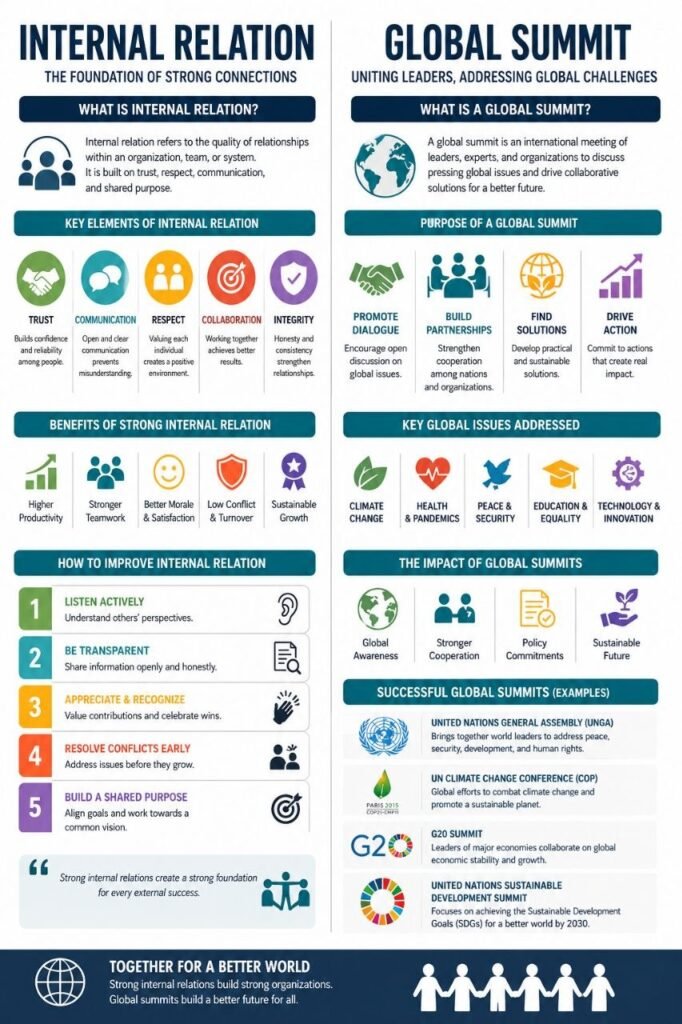
In an increasingly interconnected world, international relations (International Relations & Global Summits) play a crucial role in maintaining peace, fostering economic growth, and addressing global challenges. Nations are no longer isolated entities; their decisions impact economies, security, environmental sustainability, and technological development across borders. Global summits serve as vital platforms where world leaders, policymakers, and international organizations collaborate to tackle pressing issues and shape the future of international cooperation.
From climate change and trade agreements to security concerns and public health crises, international summits have become essential tools for diplomacy and global governance. Understanding their significance helps us appreciate how nations work together to create solutions for complex global problems.
What Are International Relations?
International relations (IR) refers to the study and practice of interactions among countries, governments, international organizations, and non-state actors. It encompasses political, economic, cultural, and security-related relationships that influence global affairs.
Key areas of international relations include:
- Diplomatic negotiations
- International trade and investment
- Global security and defense
- Climate and environmental cooperation
- Human rights and humanitarian efforts
- Technological and scientific collaboration
Strong international relations help countries build strategic partnerships, enhance economic opportunities, and maintain regional and global stability.
The Importance of Global Summits
Global summits bring together heads of state, ministers, diplomats, business leaders, and experts to discuss critical international issues. These high-level meetings provide opportunities for dialogue, negotiation, and consensus-building.
Benefits of Global Summits
1. Strengthening Diplomatic Relations
Summits create opportunities for face-to-face discussions that can reduce tensions, improve communication, and strengthen bilateral and multilateral relationships.
2. Addressing Global Challenges
Issues such as climate change, pandemics, terrorism, and economic instability require coordinated international responses. Summits enable nations to develop shared strategies and commitments.
3. Promoting Economic Cooperation
Trade agreements, investment partnerships, and economic policies are often discussed during international meetings, contributing to global economic growth and stability.
4. Enhancing Global Security
Leaders collaborate on defense strategies, conflict resolution, cybersecurity, and counterterrorism efforts to maintain international peace and security.
Major International Summits and Their Impact
G20 Summit
The Group of Twenty brings together major economies to discuss global financial stability, sustainable development, digital transformation, and economic cooperation. Decisions made during G20 meetings often influence international economic policies.
United Nations General Assembly (UNGA)
The United Nations General Assembly serves as a global platform where member states discuss international peace, human rights, sustainable development, and global governance.
Climate Conferences (COP)
The United Nations Climate Change Conference focuses on climate action, carbon emissions reduction, renewable energy adoption, and environmental sustainability.
BRICS Summit
The BRICS summit promotes economic cooperation among emerging economies and seeks to strengthen global development initiatives.
Key Challenges in International Relations
Despite the benefits of international cooperation, several challenges continue to shape global diplomacy:
Geopolitical Tensions
Competition among major powers can create conflicts and complicate international decision-making.
Economic Inequality
Differences in economic development levels often lead to disagreements regarding trade policies and resource allocation.
Climate Change
Achieving consensus on environmental commitments remains a significant challenge for policymakers worldwide.
Technological Competition
Emerging technologies such as artificial intelligence, cybersecurity systems, and digital infrastructure have become central issues in international relations.
The Future of Global Diplomacy
As global challenges become more interconnected, international cooperation will continue to evolve. Future summits are expected to focus on:
- Artificial Intelligence governance
- Cybersecurity cooperation
- Green energy transitions
- Global health preparedness
- Sustainable economic development
- Digital trade and innovation
Countries that prioritize collaboration, transparency, and mutual understanding will be better positioned to navigate future challenges and seize new opportunities.
Conclusion
International relations and global summits remain essential pillars of modern global governance. By fostering dialogue, promoting cooperation, and addressing shared challenges, these platforms help create a more stable, prosperous, and sustainable world. As nations face increasingly complex issues, effective diplomacy and meaningful international collaboration will be critical for shaping a successful global future
Leave a Reply